OFFER: A BRAND NEW SERIES AND 2 FREEBIES FOR YOU!
Grab my new series, "Heroes of the Wild Frontier", and get 2 FREE novels as a gift! Have a look here!
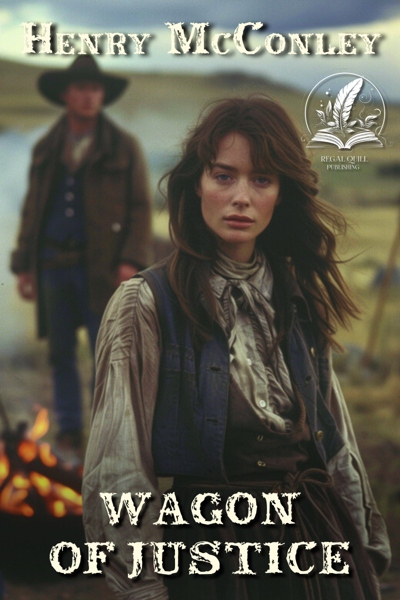
Chapter One
The dust tasted like copper and drought. Nate Garrett squinted through the red haze, following the tracks that cut northeast across the hardpan. Three horses, heavily loaded. The rustlers had gotten careless an hour back, pushing the stolen cattle too hard in the building storm.
His buckskin gelding, Sam, snorted and shook his head against the grit. Nate pulled his bandanna higher over his nose and leaned forward in the saddle, reading the story written in disturbed earth. The rustlers knew they were being followed now. The tracks showed it—tighter spacing, erratic turns, the cattle breaking off in twos and threes as the men abandoned them to save themselves.
Smart enough to cut their losses. Not smart enough to pick better ground.
The wind gusted harder, and the world narrowed to ten feet of visibility. Nate kept Sam moving at a steady trot, one hand loose on the reins, the other resting on his thigh near his grandfather’s Colt. The canyon country started here, all broken stone and dead-end draws. If the rustlers didn’t know the terrain, they’d trap themselves.
The tracks swung left, following an arroyo that climbed toward the canyon rim. Nate reined up and studied the ground. Boot prints now, leading the horses. They’d dismounted to navigate the rocky slope. He could make out the scrape marks where hooves had slipped on loose shale.
“Looking for high ground,” he said to Sam. “Or a way through.”
Neither option would help them. This section of the canyon country was a maze of box canyons and false trails. He’d hunted antelope here two years running. Knew every blind end and watering hole within five miles.
He urged Sam forward, taking it slow on the treacherous grade. The wind shrieked through gaps in the rock, and lightning flickered in the bruised clouds overhead. The storm was getting worse.
The arroyo opened onto a small plateau ringed by sandstone walls. Three horses stood ground-tied near the far end, heads down against the wind. No riders visible.
Nate dismounted and drew the Colt. The weight of it felt familiar, though he’d gone months sometimes without needing it. He wasn’t a gunfighter—never wanted to be—but five years of odd jobs across the frontier had taught him when trouble was waiting and when it wasn’t.
This was waiting.
He moved along the left wall, using the rocks for cover. The plateau was maybe fifty yards across, the far end narrowing to what looked like a slot canyon. The rustlers would either be dug-in there or already made it through to whatever lay beyond.
A voice called out from the rocks ahead. “That’s far enough, tracker.”
Nate stopped. The voice came from somewhere in the tumbled boulders along the right wall, thirty yards out.
“Lost some cattle,” Nate called back. “Thought you boys might’ve seen them.”
A laugh, harsh and dry. “Funny man. You been on us since dawn.”
“Closer to noon.”
“That’s supposed to make us feel better?”
Thunder cracked overhead, and the first fat drops of rain began to fall. Within seconds it became a downpour, the dust turning instantly to mud.
“Your horses are going to bolt if this gets worse,” Nate said. “Why don’t we settle this civilized?”
“Why don’t you turn around and ride out? We ain’t got nothing worth dyin’ over.”
“Rancher who hired me sees it different. Cattle’s all he’s got.”
“Then he shouldn’t have let us take them.”
The second voice came from higher up, near the slot canyon entrance. Two of them positioned, which meant the third was mobile or covering their back trail. Nate filed that away and stayed still, letting the rain hammer down and obscure the sight lines.
“Last chance,” the first voice said. “Ride out.”
“Can’t do that.”
The muzzle flash came from the right, exactly where Nate had pegged the first speaker. He was already moving; diving left as the bullet ricocheted off the rock where he’d been standing. He came up firing, two quick shots toward the flash, then scrambled deeper into the boulder field.
There was return fire from both positions now, bullets whining through the rain. Nate kept low and worked his way toward the right-side shooter, using the storm and the terrain to hide his position. The rustlers had good position but poor discipline—firing too much, too fast, not waiting for clear targets.
He caught movement between two boulders and fired once. There was a yelp, then cursing. Hit, but not down.
The shooting stopped. Rain continued to hammer the rock as Nate placed fresh rounds into the Colt’s cylinder and waited.
“Goddamn it, he got me in the leg!” The first voice, tight with pain now.
“Shut up!” The second voice, from the slot canyon. “You! Tracker! My partner’s bleedin’. Let us go and we’ll leave the horses. You can tell your rancher we got justice served.”
“Can’t do that either.”
“Why the hell not?”
“Because you’ll hit another ranch next month. Then another.” Nate raised his voice to carry over the storm. “That’s how it works. You keep taking until someone stops you.”
Silence. Then: “Righteous son of a bitch, ain’t you?”
“Just practical.”
He caught the movement on his left. The third rustle was trying to flank him through the rain. Nate tracked him through gaps in the rocks, waiting for a clear shot. The man was young, maybe twenty, moving too fast and too loud.
Nate let him get within fifteen feet, then stood up from behind his boulder. “Drop it.”
The young rustler spun, bringing up his pistol. Nate fired first. The kid went down hard, his gun skittering across wet stone.
Fresh gunfire erupted from both other positions, panic shooting. Nate dropped flat as bullets chewed up rock above his head. One round hit too close, spraying his face with stinging fragments.
Then he heard them. Hoofbeats. Sam’s frightened whinny.
He risked a look and saw his buckskin gelding rearing against the ground-tie, eyes white with fear. A bullet had carved a furrow across the horse’s shoulder. Not deep, but bleeding.
“No.” The word came out flat and cold.
The rustlers had stopped shooting, probably reloading. Nate stayed low and circled wide, working his way around the right side of the plateau. The rain was a solid curtain now, visibility down to arm’s length. Good for concealment, bad for shooting. But he didn’t need to see them. He knew where they’d positioned themselves, and he knew this canyon.
The sandstone walls had a weak point on the right side; a collapsed section that created a natural ramp to the rim. He’d used it before when hunting. It would put him above and behind the slot canyon position.
He climbed fast, ignoring the rain and the treacherous footing. His boots slipped twice on wet rock, but he caught himself and kept moving. At the top, he bellied out on the rimrock and looked down.
The second rustler was exactly where Nate expected, crouched behind an outcrop near the slot canyon entrance. Older man, maybe forty, with a repeating rifle. He was watching the plateau floor, gun ready.
Nate called down. “It’s over.”
The man jerked and swung the rifle up, searching for the voice. Nate put a round into the rock six inches from his head.
“Next one’s lower,” Nate said. “Drop the rifle.”
The man froze, then slowly set the rifle down. His hands came up.
“Where’s your partner?”
“In the rocks. Bleeding. I told you.”
“Call him out.”
The man turned his head and shouted. “Billy! Billy, come on out. It’s done.”
A long moment, then a figure limped from the boulder field, one leg dragging. Younger man, maybe thirty, left hand clamped over his right thigh. Blood leaked between his fingers.
“Both of you, center of the plateau. Sit down.”
They did. Nate came down from the rimrock, taking his time, keeping the Colt trained on them. The young one he’d shot was still down, breathing but unconscious. Nate checked him first; shoulder wound, clean through. He’d live.
“You got rope?” Nate asked the older one.
“Saddlebags.”
“Get it. Slow.”
The man retrieved the rope and Nate had him tie his wounded partner first, then submit to being tied himself. By the time he had them secured, the storm was starting to break, the rain thinning to drizzle.
Sam stood trembling by the plateau wall, the shoulder wound still seeping. Nate went to him and ran his hands over the gelding’s legs and body, checking for other injuries. Just the one graze, but enough to spook any horse.
“Easy, boy. Easy.”
He got his canteen and poured water over the wound, cleaning it as best he could. It would need proper doctoring when they got back to town, but for now it would hold. Sam nuzzled his shoulder, calmer now.
Nate was examining the wound more closely when he heard hoofbeats. A single rider, coming up the arroyo from the south. He straightened and turned, Colt ready.
The rider emerged from the thinning rain; a man on a gray mare, wearing a long duster and flat-crowned hat. Not a working cowboy. Everything about him spoke of money, from his tooled saddle to his polished boots. He reined up at the edge of the plateau and surveyed the scene without expression.
“Mr. Garrett, I presume.”
Nate said nothing, waiting.
The man dismounted with practiced ease. He was maybe forty, clean-shaven, with the soft hands of someone who didn’t do ranch work. “I’m Arthur Meeks. I represent certain business interests in the region.”
“That supposed to mean something to me?”
“Only that I’ve been authorized to make you an offer.” As Meeks reached into his duster Nate’s gun came up. Meeks smiled faintly. “Just paperwork, Mr. Garrett.”
He withdrew a manila envelope and held it out. When Nate didn’t move, Meeks stepped closer and offered it again.
“Go on. You’ll want to see what’s inside.”
Nate took the envelope with his left hand; gun still trained with his right. He backed up a few paces and thumbed it open. Inside: a photograph, several folded bills, and a single sheet of paper with neat handwriting.
The photograph showed a woman, maybe thirty, with dark hair and light eyes. She wore an expensive dress and looked directly at the camera with an expression Nate couldn’t quite read. Defiance, maybe. Or fear.
“Adelaide Bannister,” Meeks said. “Wife of Randall C. Bannister. Perhaps you’ve heard the name.”
Nate had. Everyone in three territories had heard of Randall Bannister. Cattle baron, land speculator, owner of the massive Broken Crown ranch. More money than most towns saw in a year.
“She left her husband a few days ago,” Meeks continued. “Mr. Bannister is naturally concerned for her safety. The frontier can be dangerous for a woman traveling alone.”
“Seems like a family matter.”
“Indeed. Which is why Mr. Bannister is willing to pay handsomely for her safe return.” Meeks gestured to the envelope. “The amount specified there is the advance. Half again that much on successful delivery to the railhead at Ashton, two weeks from today.”
Nate looked at the bills. More money than he’d make in six months of tracking work.
“Why me?”
“You have a reputation. Best tracker in three territories, they say. Resourceful. Discreet.” Meeks paused. “And you have motivation. I understand your family has fallen on difficult times.”
Something cold moved through Nate’s chest. “How do you know about my family?”
“Mr. Bannister makes it his business to know the capabilities and circumstances of men he hires. Your father’s debts are substantial. The land office in Redemption has scheduled a foreclosure auction for next month unless the outstanding balance is paid in full.”
Nate’s jaw tightened. “You sure know a lot.”
“As I said—Mr. Bannister is thorough.” Meeks nodded toward the envelope. “The job description is simple. Track Mrs. Bannister’s movements from her last known location. Bring her safely to Ashton. No harm is to come to her. Mr. Bannister wants his wife returned uninjured.”
“And if she doesn’t want to come back?”
“That’s not your concern. Your concern is following the trail and collecting your payment.” Meeks smiled again, that faint expression that didn’t reach his eyes. “Though I should mention time is a factor. Mrs. Bannister has had a six-day head start. The sooner you begin, the better your chances.”
Nate looked at the photograph again. The woman stared back at him, frozen in that moment of expensive clothing and unreadable expression.
He thought of his sister Sarah, sixteen years old, trying to manage the homestead alone while their father sat in his chair and stared at nothing. Thought of the overdue payment notices, the creditors’ letters, the arithmetic that never quite worked out no matter how he juggled the numbers.
Two weeks’ work. Track one runaway wife. Collect enough money to save the ranch and give his family their future back.
“What’s the catch?” he asked.
“No catch. Simply a husband concerned for his wife’s wellbeing, and a substantial payment for the man who can bring her home safely.”
The rain had stopped completely now. Overhead, the clouds were breaking apart, revealing strips of hard blue sky. The three tied rustlers sat in muddy silence, watching the conversation.
Nate folded the envelope and looked at Meeks. “I’ve got to deliver these three to the rancher who hired me. Then I need to see to my horse.”
“Of course. Mr. Bannister is a reasonable man. He understands professional obligations.” Meeks mounted his gray mare. “The last known location is noted in the papers. A boarding house in Redemption, five days ago. Trail’s getting cold, Mr. Garrett.”
He touched his hat brim and turned his horse back toward the arroyo.
Nate watched him disappear into the broken terrain, then looked down at the envelope in his hand. The photograph was visible through the gap, that woman’s face staring up at him.
Simple job. Track a runaway wife. Save his family.
He thought about Meeks knowing his family’s situation. Thought about how quickly the offer had appeared, how convenient the timing. Thought about Bannister’s reputation—the whispered stories about ranchers who opposed him, competitors who disappeared, deals that somehow always went his way.
But he also thought about Sarah seated on the dusty floor, reading by firelight because they’d sold most of the furniture just to stay afloat. About his father’s hollow eyes when the doctor said Nate’s mother might have lived if they could’ve afforded the medicine.
Sam shifted behind him, favoring his wounded shoulder.
“I know,” Nate said quietly. “I don’t like it either.”
Yet he went ahead and slipped the envelope into his coat and started gathering the rustlers for the ride back to town.
Chapter Two
One day earlier
The grandfather clock in the hall struck four. Adelaide Bannister lifted her pen from the ledger page and listened.
Silence. The house held its breath around her.
She dipped the pen again and continued copying, her handwriting small and precise. The ledger lay open on Randall’s desk; lit by a single candle she’d shielded with her hand. Column after column of figures, dates, names. Six months of waiting for this final piece—the complete record of payments to Sheriff Morgan, to the land office clerk, to the railroad surveyor who’d certified fraudulent property assessments.
Her hand cramped. She flexed her fingers and kept writing.
The numbers told their own story. Fifteen ranchers bought out at half-value or less. Seven families displaced when their loans mysteriously came due early. Three competitors who’d sold their herds at a loss after cattle prices suddenly collapsed in regions where only Randall’s Broken Crown brand seemed to thrive.
She reached the final entry and copied it carefully: T. Garrett—final payment received. Land transfer complete.
Thomas Garrett. She knew that name. Randall had mentioned him once in passing, laughing about a rancher fool enough to believe government contracts were legitimate. She’d seen the satisfaction in her husband’s eyes when he’d described the man’s ruin.
Adelaide blotted the page and set it aside to dry. Five sheets that night, added to the twenty-three already hidden in the false bottom of her sewing basket. Enough to hang a man, if federal authorities cared about frontier justice.
She closed the ledger and returned it to its exact position on the shelf. Randall was meticulous about his office—everything had its place, and he noticed disturbances. She’d learned that in her first month of marriage, when he’d struck her for moving his correspondence.
The candle went out. She pocketed it and moved to the door, pausing to let her eyes adjust to the darkness of the hallway. The house creaked in the pre-dawn cold. Upstairs, she heard nothing. The house staff wouldn’t rise for another hour.
She climbed the servant’s stairs, avoiding the third step that groaned. In her room, she changed quickly from her nightdress into traveling clothes—a simple brown skirt, white blouse, wool jacket. Sturdy boots instead of the silk slippers Randall preferred. She pinned her hair up tight and covered it with a plain bonnet.
The sewing basket sat on her dresser. She knelt and worked the false bottom free, withdrawing the folded pages she’d accumulated over six months. Twenty-eight sheets in total, each filled in her careful handwriting. She wrapped them in oilcloth and secured them with string.
From beneath her mattress, she retrieved the leather satchel she’d hidden there two weeks earlier. Inside: the medical affidavit from Dr. Cross, signed and dated, documenting three years of injuries with clinical precision. Contusions. Lacerations. A cracked rib that hadn’t healed properly. The doctor had been terrified to provide it, but he’d done it anyway. She was grateful that some men still had consciences.
She had added her savings—one hundred forty-seven dollars, accumulated penny by penny from household accounts Randall never bothered to audit. She packed her mother’s silver locket, the only thing of value she’d brought to her marriage. And then a small knife with a four-inch blade, purchased from a traveling peddler six months ago.
The documents went into the satchel last, cushioned between spare underclothes. She buckled it shut and stood.
Her wedding ring caught the faint light from the window. For three years she’d worn it; three years of learning to read her husband’s moods, to speak carefully, to make herself small and unnoticeable. Three years of documenting everything, because she’d understood within six months that escape without evidence would be pointless. Randall would find her. He always found what he considered his property.
But evidence—evidence presented to federal authorities, published in newspapers, spoken in courtrooms—that might protect her. If she could reach someone who cared about the law more than they feared Randall Bannister.
She slipped the ring off and placed it on the dresser. Her finger felt strange without it. Lighter.
The stable was a dark shape across the yard, barely visible in the hour before dawn. Adelaide crossed quickly, keeping to the shadows along the fence line. Her boots made soft sounds in the dirt.
Inside, the horses shifted in their stalls. The smell of hay and leather and animal warmth was overwhelming.
“Mrs. Bannister?”
She turned toward the voice. The stable hand, Tommy, emerged from the tack room. He was maybe nineteen, nervous, with the soft face of someone not yet hardened by frontier life.
“Is it ready?” she asked.
“Yes, ma’am. Like you asked.” He led her to the far stall where a bay mare stood saddled. It wasn’t Adelaide’s usual mount, as that one was too distinctive and would be recognized. This mare was steady but unremarkable. The kind of horse that wouldn’t draw attention.
Adelaide handed him an envelope. “Fifty dollars. The other fifty when you’ve done what we discussed.”
Tommy took it with shaking hands. “You’re sure about this? Mr. Bannister, he’ll—”
“He’ll ask which direction I rode. You’ll tell him northeast, toward the railroad at Carlisle. You saw me leave an hour before dawn, riding hard.”
“But you’re going—”
“Don’t say it. Don’t even think it. What you don’t know, he can’t force out of you.” She kept her voice gentle. Tommy was helping her from kindness, not calculation. He didn’t deserve what would happen when Randall discovered the deception.
She mounted the mare and adjusted the satchel across her back. The eastern sky was beginning to pale.
“Mrs. Bannister?” Tommy looked up at her. “That money you gave me—I’m leaving. Today, soon as you’re clear. Going to California like my brother did. Mr. Bannister won’t get nothing from me.”
Relief washed through her. “That’s wise, Tommy. Very wise.”
“I hope you make it, ma’am. Wherever you’re going.”
She touched her hat brim and turned the mare toward the western trail.
The ride took three hours, following creek beds and rock shelves that wouldn’t hold tracks. Adelaide had practiced this route twice before on afternoon rides, claiming she wanted to sketch the landscape. Randall had found it amusing, his refined Eastern wife playing at Western pursuits.
He wouldn’t find it amusing now.
The sun was fully up when she reached the meeting point—a shallow valley where the old freight road bent south toward the Mormon settlements. She reined up behind a stand of cottonwoods and waited.
After ten minutes, she heard them: the creak of wagon wheels, the jingle of harness, voices calling to oxen. The convoy appeared around the bend, six wagons strung out in a loose line. Families heading west, seeking whatever it was people always sought beyond the next horizon.
Adelaide guided her mare down to meet them.
The lead wagon stopped. A woman sat on the bench, maybe forty, with sun-weathered skin and black hair streaked with gray. Chinese features, steady eyes that took in Adelaide’s appearance without judgment.
“You’re the widow?” the woman asked.
“Yes. Mrs. Adelaide Cross.” The false name came easily. She’d practiced it for weeks.
“Mary Chen. We met in Redemption.”
“Oh, that’s right.”
They had. Adelaide had found Mary through careful inquiries, learning that the widow Chen was organizing a wagon train west and took paying passengers. Respectable women who could cover their own expenses and wouldn’t cause trouble.
“You have the payment?” Mary asked.
Adelaide withdrew a folded envelope from her jacket. “Seventy-five dollars. As we discussed.”
Mary took it and counted quickly. She nodded and tucked the money away. “You can ride with the third wagon. The Johnsons. They’ve got room and won’t ask questions.” She paused, studying Adelaide more closely. “Though I’ll ask one. You running from something or toward something?”
“Does it matter?”
“Might. If what you’re running from decides to follow.”
Adelaide met her gaze. “I won’t bring trouble to your people.”
“Trouble comes whether we bring it or not. That’s the frontier.” Mary gestured toward the line of wagons. “Third one back. Mrs. Johnson’s expecting you.”
Adelaide rode down the line. The wagons were typical immigrant rigs—heavy canvas covers, weathered wood, pulled by oxen teams. Women and children peered at her from the back openings. A few men walked alongside, carrying rifles.
The third wagon had Johnson painted in fading letters on the side panel. A woman in her fifties sat on the bench, plump and tired-looking. Two teenage daughters occupied the back.
“Mrs. Cross?” the woman called. “I’m Helen Johnson. Mary said you’d be joining us.”
“If that’s acceptable.”
“Of course, dear. Though you’ll want to ride rather than sit in the wagon. It’s bumpy as all creation back there.” Helen smiled. “We’re stopping in about two hours. You can meet everyone properly then.”
The convoy rolled forward. Adelaide guided her mare alongside the Johnson wagon, settling into the steady pace. Around her, the sounds of travel: creaking wheels, plodding hooves, children’s voices, someone singing in one of the rear wagons.
Normal. Almost peaceful.
She looked back once, scanning the horizon behind them. Nothing but empty grassland and distant hills. No riders. No dust trails.
Not yet.
They nooned near a creek with good water and scattered shade. Adelaide tended to her horse alongside others while families spread out for their midday meal. She’d brought dried meat and hardtack, planning to keep to herself, but Helen Johnson waved her over.
“Come sit with us, dear. You can’t eat alone your first day.”
Adelaide hesitated, then joined them. Helen’s daughters were sixteen and fourteen, both watching her with open curiosity. Helen herself seemed content to chatter about the journey, the weather, the hopes they all carried for Oregon Territory.
“And your husband, Mrs. Cross?” Helen asked eventually. “Mary mentioned you’re recently widowed.”
“Yes. Three months ago.” Adelaide had prepared this story too. “Pneumonia. It was very quick.”
“I’m so sorry, dear. And no children?”
“No.”
Helen patted her hand. “Well, you’re young still. Out west, there’s plenty of men seeking wives. You’ll find someone again, I’m sure.”
Adelaide said nothing. The thought of marrying again made her stomach turn.
Mary Chen approached, carrying a tin cup of coffee. She offered it to Adelaide. “Walk with me a moment?”
They moved away from the wagons, following the creek upstream. Mary sipped her coffee and kept her voice low.
“I knew a woman once who had that look you’ve got. Scared but hiding it. Determined but not sure if determination’s enough.”
Adelaide stopped walking. “What look?”
“The look of someone who left everything behind and isn’t certain she’ll survive what comes next.” Mary turned to face her. “I’m not asking for your story. But I need to know if whoever you’re running from is the kind that sends men with guns.”
A long silence. Adelaide could lie. Should lie. But Mary’s level gaze demanded honesty.
“Yes,” she said quietly.
“How many men?”
“I don’t know. However many it takes.”
Mary nodded slowly. “The Mormon settlements are six days west if we make good time. Federal marshal has an office there. That where you’re headed?”
“Eventually.”
“You got proof of whatever needs proving?”
Adelaide touched the satchel she’d kept looped across her body even while eating. “Yes.”
“Good. Proof matters.” Mary finished her coffee and tossed the dregs into the creek. “We’ve got fifteen fighting men in this convoy if it comes to that. Most of them can shoot. Won’t let anyone take you against your will, you understand? But if it’s going to get people killed, I need to know now.”
“I won’t let it come to that,” Adelaide said. “If they find me, I’ll—I’ll go quietly. I won’t risk your families.”
“Don’t be stupid. Going quietly is how women end up dead in ditches.” Mary’s voice was flat. “You stay with the convoy. We protect our own. But you also start thinking about what happens when they do catch up, because they will. Men with money always send someone.”
She walked back toward the wagons, leaving Adelaide standing by the creek.
The knife hidden in her sleeve felt very small suddenly. Insufficient.
Adelaide knelt and splashed cold water on her face. When she looked up, she saw Mary organizing the convoy for the afternoon’s travel. Saw Helen Johnson settling her daughters back into their wagon. Saw a group of people—strangers—who’d accepted her into their group based on a false name and a plausible story.
People who would fight for her if necessary.
She couldn’t let that happen. Wouldn’t.
But she also couldn’t go back. The ledger pages in her satchel were the only leverage she had, the only thing that might protect her if she reached federal authorities. Without them, Randall would kill her quietly and tell everyone she’d died in some tragic accident. Another careless woman lost to the frontier’s dangers.
With them, he might hesitate. Might have to let her live rather than risk the evidence becoming public.
She stood and returned to her horse. The convoy was forming again, wagons pulling back onto the trail. Adelaide mounted and took her place beside the Johnson wagon.
As they rolled west, she kept watching the horizon behind them. Empty still. But that would change.
Randall had been meeting with his enforcers the night before. Planning. By now he would have returned to the ranch, discovered her gone, questioned Tommy before the stable hand could flee. Would have found the ring on the dresser and known this wasn’t some impulsive flight.
He’d send someone. The best tracker he could find. Someone desperate enough to take the job without asking too many questions.
Adelaide touched the knife in her sleeve and made her silent promise again: she would not be taken alive.
Though first, she would try very hard not to be taken at all.
The wagons creaked forward into the afternoon heat, raising dust that hung in the still air. Behind them, their tracks stretched back across the grassland, clear as a written invitation.
Come find me, she thought. Come try.
Just know… I won’t make it easy.
Chapter Three
Nate delivered the rustlers to the rancher who’d hired him, collected his payment, and saw to Sam’s shoulder wound. The town veterinarian cleaned and dressed it, saying the horse would heal fine with rest. Nate didn’t mention he’d be riding hard within the day.
Meeks was waiting outside the livery when Nate emerged.
“I assumed you’d accepted Mr. Bannister’s offer,” Meeks said.
“Haven’t decided yet.”
“The advance money in your pocket suggests otherwise.” Meeks gestured to his gray mare. “I’ll take you to the Broken Crown. You’ll want to see where Mrs. Bannister lived, gather information about her habits and likely destination.”
Nate looked at Sam, standing in the livery corral with his bandaged shoulder. The gelding needed rest, not a forty-mile ride to Bannister’s ranch.
“I’ll need a fresh horse,” Nate said.
“Already arranged.” Meeks led him to a bay gelding, well-fed and sound. “Courtesy of Mr. Bannister. Consider it part of your equipment for the job.”
The ride to the Broken Crown took most of the day. They followed good roads through rolling grassland, passing smaller ranches and homesteads that looked worn compared to Bannister’s operation. Twice they crossed boundary markers for Broken Crown land; painted posts with the ranch brand burned deep into the wood.
“How much land does Bannister own?” Nate asked.
“Approximately forty thousand acres. Largest ranch in the territory.” Meeks spoke with the pride of someone discussing his own property. “Mr. Bannister has built something truly impressive. Started with nothing twenty years ago. Now he controls cattle prices for three hundred miles in any direction.”
“Controls them how?”
“Through volume, Mr. Garrett. When you run more cattle than your nearest five competitors combined, you set the market rates. Simple economics.”
Thunder rumbled in the distance. The sky to the west was darkening again, another storm building.
They reached the Broken Crown at dusk. The ranch sprawled across a valley floor. There was a main house, a bunkhouse, stables, corrals, outbuildings. Everything well-maintained, and clearly prosperous. Ranch hands moved among the buildings, ending their day’s work. Nate counted maybe twenty men; more than most ranches employed.
Meeks led him to the main house, a two-story structure with a wide porch and glass windows. Real glass, not oilpaper. Money showing in every detail.
A man emerged from the stables as they dismounted; tall, heavily built, maybe forty-five, with a scarred face that looked like someone had drawn a knife from temple to jaw years ago. He walked with the easy confidence of someone who knew how to handle himself.
“This him?” the man asked Meeks.
“Dutch Keller, meet Nate Garrett. Mr. Garrett, this is the Broken Crown’s foreman.”
Dutch looked Nate over with cold appraisal. His eyes were the color of dirty ice. “Heard you were good. Hope it’s true.”
“Good enough.”
“We’ll see.” Dutch turned to Meeks. “Boss wants to see him before he leaves.”
“Of course. But first, show Mr. Garrett Mrs. Bannister’s room. He’ll need to understand what he’s tracking.”
Dutch’s expression shifted. Something that might have been satisfaction or anticipation. Nate found it hard to read on the man’s scarred face. “This way.”
The house interior matched the exterior: expensive furniture, imported rugs, oil paintings on the walls. They climbed stairs to the second floor and Dutch opened a door at the end of the hall.
“Her room,” he said. “Boss said leave it like she left it.”
Nate stepped inside. The space was neat, almost austere. A bed with plain covers, a dresser, a writing desk by the window. Bookshelves along one wall, filled with leather-bound volumes. He moved closer and read the spines: medical texts, anatomy studies, treatises on disease and treatment. “These are serious books. Seems like she liked to play doctor.”
“Yeah, well. She had ideas above her station. Thought being educated made her special.” Dutch leaned against the doorframe. “Boss tried to be patient with her moods, but she got worse over time. Started making wild accusations. Saying he was cruel to her. Complete hysteria.”
Nate opened the writing desk. Empty drawers. Nothing personal remained. No letters, no diary, no small items people accumulated. He checked the dresser. Same story. Clothes still hung in the wardrobe, but anything meaningful was gone.
“She planned this,” Nate said.
“Obviously. Stole property too; papers from the boss’s office, money from the household accounts. Probably other things we haven’t discovered yet.” Dutch straightened. “Boss wants her back. Not to punish her, mind you. He’s worried. She’s not well. Needs proper care.”
Nate studied a water stain on the ceiling above the bed. “She sleep here alone?”
“Boss gave her her own room. She requested it. Said she needed space for her reading and such.” Dutch’s voice carried an edge. “He indulged her. Man’s a saint, way he tried to make her happy.”
“How long were they married?”
“Three years. Met her in St. Louis when he was there on business. She was a schoolteacher. Pretty thing, educated, seemed like a good match.” Dutch shook his head. “But she never adjusted to frontier life. Started having episodes. Delicate constitution.”
Nate crossed to the window and looked out. The view showed the stable yard and the western trail beyond the ranch boundaries. A good view for watching people come and go.
“When did she leave?”
“Few days ago. Boss was in town overnight on business. When he came back, she was gone. Left her wedding ring on the dresser like some kind of statement.” Dutch moved into the room. “Stable hand said she rode out before dawn, headed northeast toward the Carlisle railroad. But we checked there. No one matching her description bought a ticket or was seen in town.”
“So she misdirected.”
“Seems likely. Which is why boss needs a real tracker, not just ranch hands riding in circles.” Dutch gestured to the books. “She’s clever. Book-smart. But frontier-stupid. Won’t last long out there alone.”
“Who says she’s alone?”
“Beg pardon?”
“You said ‘alone.’ What makes you think she didn’t have help?”
Dutch’s expression hardened. “We questioned the staff. No one helped her. No one knew anything.”
Nate let it drop. He’d learned what he needed from the room: Adelaide Bannister was educated, careful, and methodical. She’d planned her escape and covered her tracks. The medical books suggested someone who studied problems systematically. The empty desk and dresser showed someone who took only what mattered.
Not the profile of a hysterical woman fleeing on impulse.
“Boss is waiting,” Dutch said. “Come on.”
They went downstairs to a study lined with more bookshelves and dominated by a massive oak desk. A man stood at the window, back turned. Tall, well-dressed, iron-gray hair. When he turned, Nate recognized the coldness in his blue eyes.
Randall Bannister looked like money and power dressed in human form.
“Mr. Garrett.” Bannister’s voice was smooth, educated. “Thank you for accepting my offer.”
“Haven’t caught her yet.”
“But you will. I’ve heard excellent things about your tracking abilities.” Bannister moved to his desk and poured two glasses of whiskey from a crystal decanter. He offered one to Nate.
Nate took it but didn’t drink.
“My wife,” Bannister said, settling into his chair, “is unwell. Has been for some time. I’ve tried to provide the best care, but she resists help. Now she’s fled into dangerous territory with God knows what wild notions in her head.”
“Dutch mentioned she took papers from your office.”
“Household records. Meaningless to anyone else, but she’s convinced herself they prove something nefarious.” Bannister sighed. “I’m a businessman, Mr. Garrett. I make deals, I trade cattle, I acquire property. All perfectly legal. But Adelaide has constructed elaborate fantasies about my work. It’s part of her condition.”
“What condition?”
“The doctors call it female hysteria. Delusions, emotional instability, paranoia. She’s accused me of terrible things. Completely unfounded, of course.” Bannister drank his whiskey. “I blame myself. I should have insisted on treatment sooner. Now she’s out there, vulnerable, possibly dangerous to herself.”
Nate set his untouched glass on the desk. “Your foreman said she might have gone west. Any reason she’d head that direction?”
“None that I know of. Unless she’s trying to reach California. She mentioned it once—said she’d always wanted to see the ocean.” Bannister’s expression softened slightly. “Despite everything, I want her back safely. No harm is to come to her. You understand?”
“I understand you’re paying me to find her.”
“And return her here. Uninjured. Those are the terms.” Bannister stood and moved to a wall map showing the territory. “She’s had a three-day head start. If she’s traveling alone on horseback, she could be anywhere in this arc.” He traced a wide semicircle west of the ranch. “But if she joined travelers or sought shelter in settlements, she’ll have moved more slowly.”
“I’ll find her.”
“I’m certain you will. And Mr. Garrett? When you do, she’ll likely tell you stories. Terrible accusations. She’s very convincing when she wants to be.” Bannister met his eyes. “Don’t let her manipulate you. Remember that she’s ill. Everything she says should be viewed through that lens.”
Nate kneaded his hat in his hands. “Is that all?”
“One more thing.” Bannister returned to his desk and withdrew another envelope. “Additional advance. For expenses. And to demonstrate my good faith.”
Nate took it. Heavier than the first payment.
“Dutch will provide supplies for your journey. Anything you need.” Bannister extended his hand. “Bring my wife home safely, Mr. Garrett. That’s all I ask.”
Nate shook the offered hand—took note of the firm grip, warm and dry—and followed Dutch out.
In the stable yard, Dutch assembled supplies: dried beef, hardtack, fresh ammunition, a bedroll, canteens. He worked in efficient silence until everything was packed on the bay gelding.
“One thing you should know,” Dutch said as Nate checked the cinches. “Mrs. Bannister isn’t just confused. She’s vengeful. Might try to hurt the boss through lies if she gets the chance. Don’t believe a word she says.”
“I’m here to track her, not interview her.”
“Good. Keep it that way.” Dutch handed him a final item. A leather lead rope. “For bringing her back if she resists. Boss wants her unharmed, but that doesn’t mean you can’t restrain her if necessary.”
Nate looked at the rope, then at Dutch’s scarred face. “I’ll manage.”
He mounted and rode out as the storm clouds opened up, rain hammering down in sheets.
OFFER: A BRAND NEW SERIES AND 2 FREEBIES FOR YOU!
Grab my new series, "Heroes of the Wild Frontier", and get 2 FREE novels as a gift! Have a look here!
Hello my dears, I hope you enjoyed the preview! I will be waiting for your comments here. Thank you 🙂